
Dimensional Weight Shipping from China: How to Prevent Surprise Express Charges

Summary answer
Unexpected express charges often appear because the carrier bills the greater of actual weight and dimensional weight, then remeasures the packed cartons after collection. A supplier quote based on estimated carton dimensions can therefore be lower than the final carrier invoice. Importers can reduce this risk by confirming the packed-carton size and weight, the carrier's current divisor and rounding rules, the chargeable-weight basis, and the process for handling remeasurement before approving shipment.
A freight estimate is only as reliable as the data behind it. Suppliers and forwarders may quote from a sample carton, a packaging drawing, or an estimated master-carton plan. Final packed cartons can be larger because of protective inserts, thicker cartons, mixed units, void fill, or last-minute packaging changes.
Express carriers commonly compare actual scale weight with a volume-based calculation. If the carton occupies more network capacity than its scale weight suggests, dimensional weight may become the chargeable weight. Carriers may also apply rounding, minimums, remote-area fees, oversized-piece rules, or correction charges.
Actual weight is the measured weight of the packed carton. Dimensional weight converts carton volume into a billing weight. Chargeable weight is usually the figure the carrier uses after comparing the applicable values and applying its service rules.
Illustrative calculation: Length x Width x Height / divisor
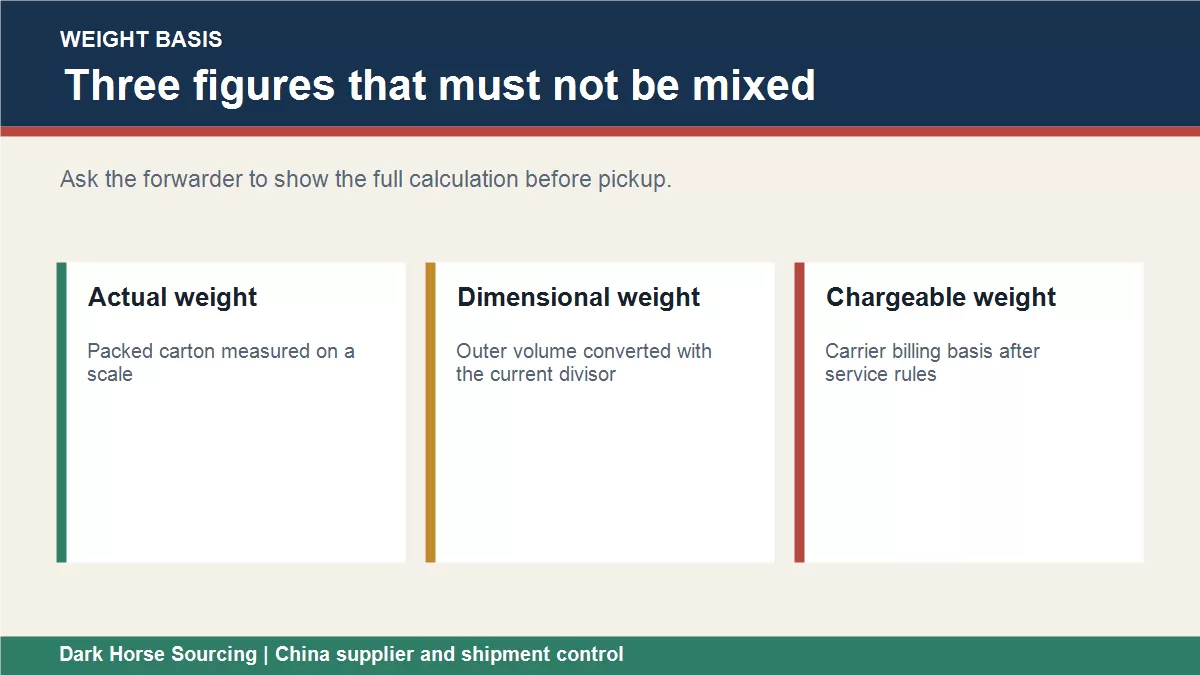
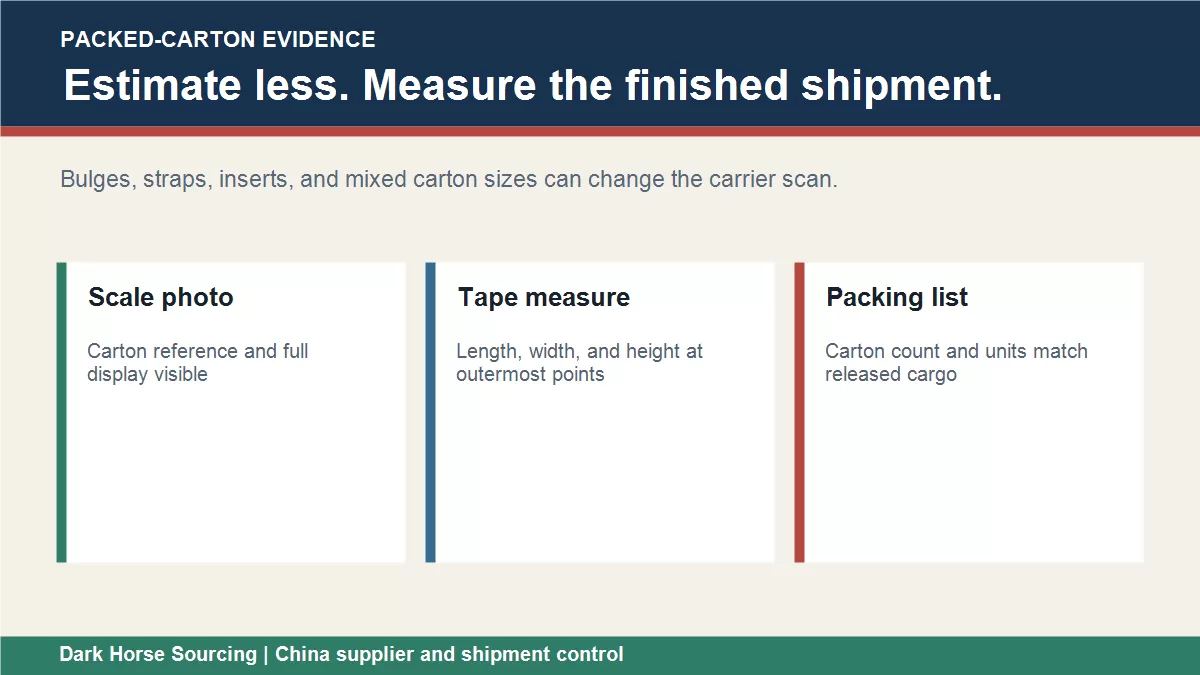
Do not approve express shipping from a packing-list estimate alone. Request evidence from representative finished cartons after final packaging is complete.
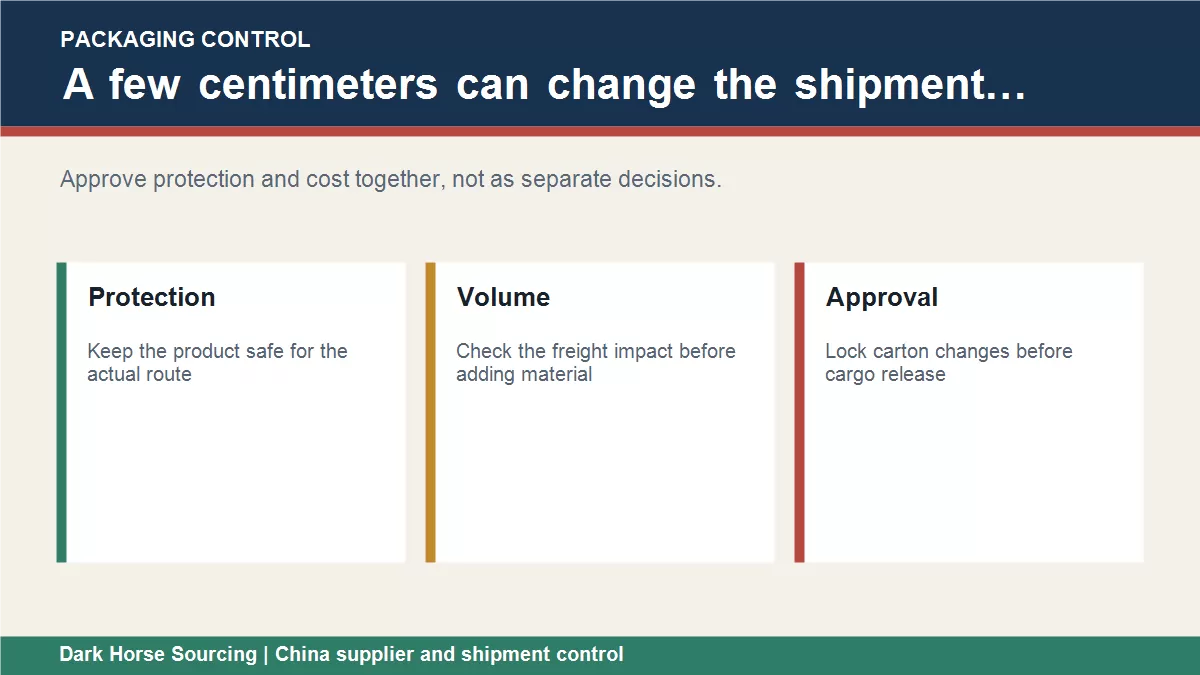
Packaging is a freight-cost variable, not only a product-protection decision. Ask the supplier to obtain approval before changing master-carton dimensions, units per carton, protective inserts, double-boxing, palletization, carton grade, or bundled accessories.
The goal is to make the protection level and freight impact visible before cargo release.
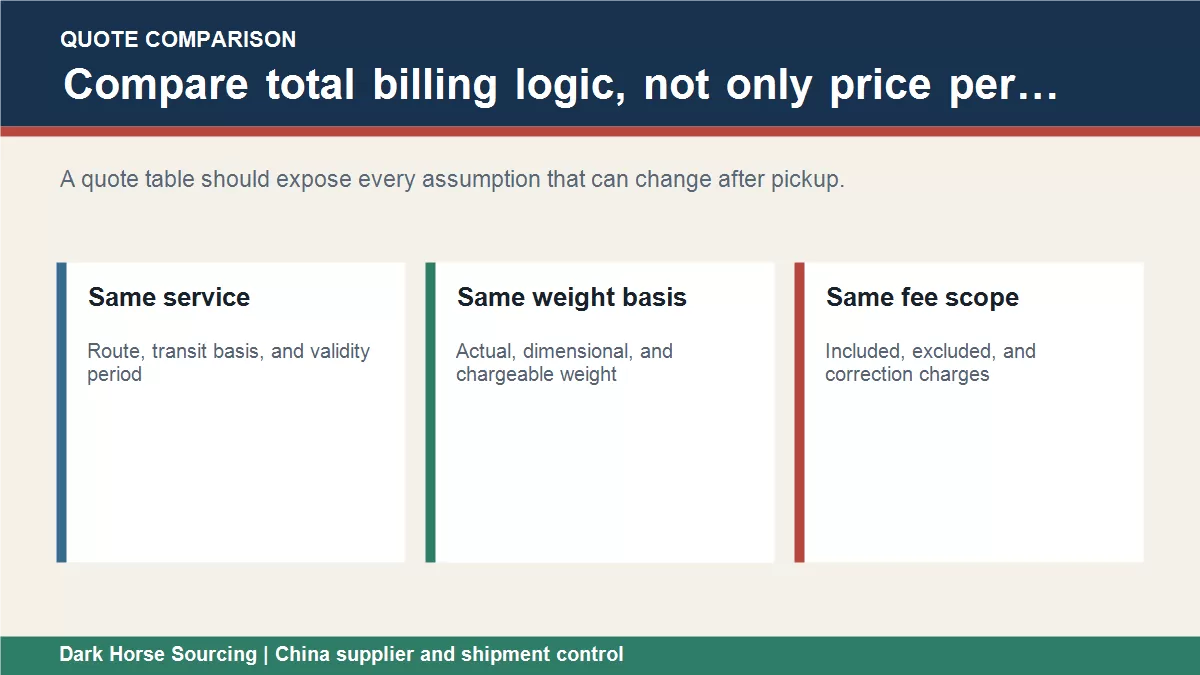
A lower per-kilogram rate does not necessarily produce the lowest landed shipping cost. Two forwarders may use different chargeable weights, divisors, rounding methods, or included fees.
Before shipment, agree on who will provide the carrier measurements, affected tracking number or carton reference, original pre-dispatch evidence, revised chargeable-weight calculation, and the deadline and method for submitting a dispute.
Final packed dimensions or weight may differ from the estimate, dimensional weight may exceed actual weight, or the carrier may have added service-specific fees or corrections. Compare the original evidence, carrier measurement, and quote terms.
Both can provide a calculation, but the forwarder's quote should state the carrier service and billing rules. The supplier should provide final packed-carton evidence.
Not always. Smaller cartons may require more pieces, change handling, reduce product protection, or create other fees. Optimize the full packaging and shipping plan.
Dark Horse Sourcing helps qualified importers, Amazon FBA sellers, distributors, and ecommerce operators coordinate supplier packaging evidence, packing-list checks, and shipment-release controls in China. Send the product, carton plan, destination, and shipping stage to request a sourcing risk assessment.
Contact us
Call Us: +86 193 7668 8822
Email:info@darkhorsesourcing.com
Add: Building B, No.2, He Er Er Road, Dawangshan Community, Shajing Street, Bao'an District, Shenzhen, China
 @Darkhorsesroucing


 EN
EN
 ar
ar
 da
da
 nl
nl
 fr
fr
 hu
hu
 it
it
 pl
pl
 pt
pt
 es
es
 sv
sv
 de
de
 cs
cs
 ga
ga
 ro
ro
 sk
sk
 tr
tr
 hi
hi
 ru
ru
 bn
bn